Work as Imagined vs Work as Done: What Porridge Reveals About Processes
Porridge as a study of Work as Imagined versus Work as Done: why experienced people adapt the process, and why automating the official version fails.
8 min read →Article
Why Smart Product Managers Keep Solving the Wrong Problem
By Richard Faint · 30 January 2026 · 9 min read
Last updated
On screen

Product managers should not treat complex product problems as isolated backlog items. Real product failures often come from misunderstood systems: competing stakeholder goals, hidden constraints, feedback loops, delays, incentives, technical debt and excluded voices. A stronger product approach uses multiple systems lenses: soft systems thinking to frame messy problems, hard systems thinking to find constraints, system dynamics to understand delayed consequences, and critical systems thinking to test who benefits, who pays the cost, and who is missing from the decision. The goal is not just to ship features, but to change system behaviour deliberately.
Product management fails most expensively when it treats systemic problems as isolated backlog items.
Product teams rarely fail because nobody had ideas. They fail because local fixes interact with users, operations, incentives, support capacity, technical debt and commercial pressure in ways that were not understood before the feature shipped.
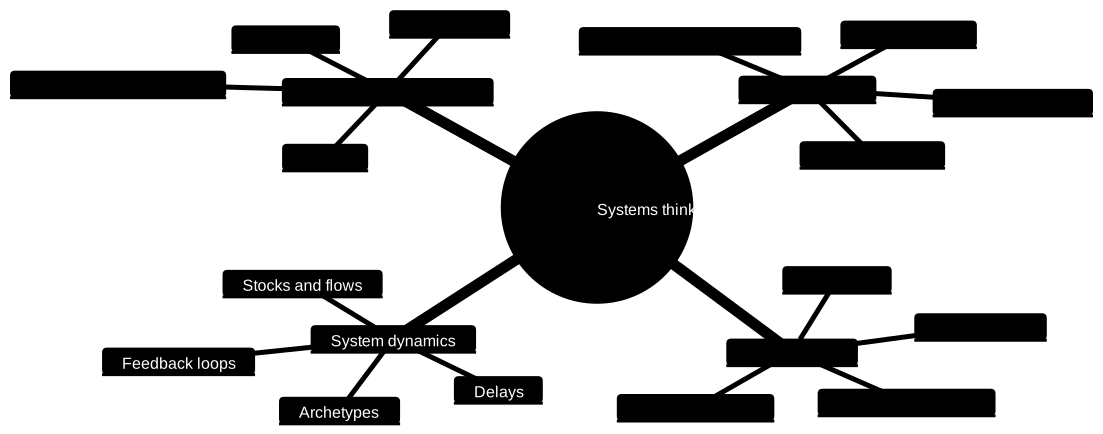
That is the central argument of this article: a product manager needs more than one systems lens. Hard systems thinking, soft systems thinking, system dynamics and critical systems thinking each answer a different kind of product question.
Product-management thesis: frame the messy situation first, identify the real constraint second, model feedback and delay third, then challenge who benefits and who carries the cost.
Product management fails most expensively when it treats systemic problems as isolated backlog items. A product team sees activation dip, ships a “fix”, watches the metric rebound, and then wonders why churn, support demand, distrust, or operational drag appear a quarter later. Donella Meadows’ basic warning still applies: “The system, to a large extent, causes its own behavior!”
A more rigorous product practice therefore needs more than one systems lens:
For product managers, the practical implication is straightforward: frame the problem with soft systems methods, find the real bottleneck with hard systems methods, model delayed side-effects with system dynamics, and then subject the intervention to critical scrutiny about who benefits, who bears the costs, and whose voice is missing.

Consider a familiar product scenario. A SaaS team sees activation stall. In response, it ships an AI setup wizard, adds more nudges, auto-invites colleagues by default, and tightens the success metric around first-week activation.
The result looks good for two sprints. Then support tickets rise, workspaces become noisy, admins complain about clutter and permissions, engineering gets pulled into reliability work, and a delayed uptick in churn wipes out the initial gain.
At that point the room fills with the corporate equivalent of Office Space: another “What would you say you do here?” meeting. The harder truth is that nobody’s local decision was irrational; the system was.

The product-management mistake is to treat each symptom as a separate backlog item. The systems-thinking move is to ask what structure is generating the pattern.
| Lens | Best used when | Product-management question | Common tools |
|---|---|---|---|
| Hard systems | The goal is agreed and optimisation is possible | “Where is the constraint in the flow of value?” | Process modelling, Theory of Constraints, queueing, optimisation |
| Soft systems | Stakeholders disagree about the problem or purpose | “Whose worldview is shaping the problem definition?” | Rich pictures, CATWOE, root definitions, facilitated debate |
| System dynamics | Delays, feedback and accumulations drive behaviour | “What will this intervention change over time?” | Causal loop diagrams, stock-and-flow models, archetypes |
| Critical systems thinking | Power, boundaries and exclusion affect the definition of improvement | “Who benefits, who loses, and who is missing?” | Boundary critique, methodological pluralism, participatory design |
If the issue is tightly specified, hard systems thinking earns its keep. Jackson’s account of the “system of systems methodologies” places hard approaches in relatively simple, unitary contexts: settings where the objective is sufficiently agreed to permit modelling, optimisation and control.
In product work, that fits cases such as:
Goldratt’s Theory of Constraints is especially useful here because it insists that performance is limited by the current constraint rather than by everyone’s favourite local complaint.
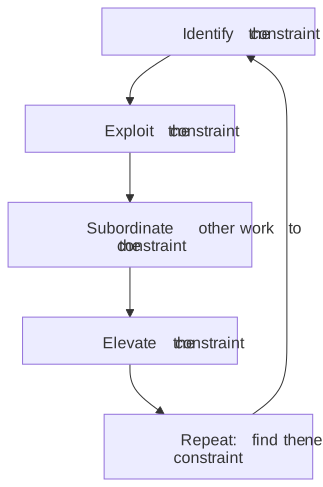
For product managers, the operational lesson is sharp: optimise the whole flow to value, not the loudest sub-metric. That is often the difference between real throughput improvement and prettier dashboards.
PM warning: if every squad is asked to improve its own metric independently, the product is probably being locally optimised. The customer experiences the system, not the org chart.
Product problems are often not hard problems at all. They are soft in Peter Checkland’s sense: messy situations with multiple legitimate worldviews, competing purposes and no single agreed definition of success.
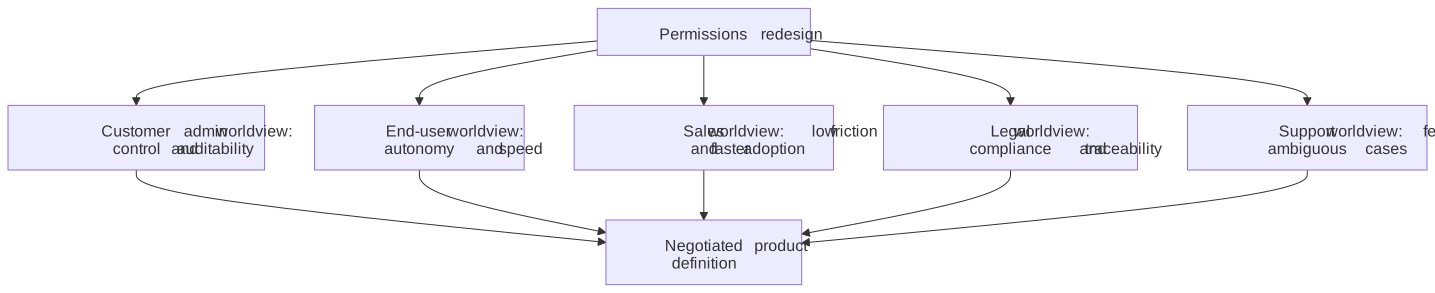
A permissions redesign is a clean example:
No A/B test can settle that framing by itself. Soft systems tools such as rich pictures, root definitions and CATWOE help product teams surface those assumptions before they start arguing with data generated inside one faction’s worldview.
System dynamics becomes essential once the issue involves stocks, flows, feedback and delays. In product management, the effects you care about are often separated from the decisions that caused them.
Activation today may increase the stock of active users, but it may also increase:
Those accumulations feed back into retention, NPS, adoption and revenue with a delay.

Product teams need this discipline because their interventions often fit familiar archetypes:
| Archetype | Product example | PM risk |
|---|---|---|
| Fixes That Fail | Add nudges to raise activation, creating future support and trust problems | Short-term metric win, long-term damage |
| Shifting the Burden | Add manual customer-success workarounds instead of fixing onboarding | Dependency on heroic operations |
| Limits to Success | Growth exceeds support, reliability or implementation capacity | Good growth creates its own ceiling |
| Growth and Underinvestment | Customer base grows faster than platform resilience | The product becomes successful enough to become fragile |
The final lens is critical systems thinking. It matters whenever the product intervention changes who is heard, measured, protected or ignored.
For product managers, this translates into hard questions about boundary setting:
Critical systems thinking does not replace product analytics. It interrogates the social and moral boundary inside which those analytics make sense.
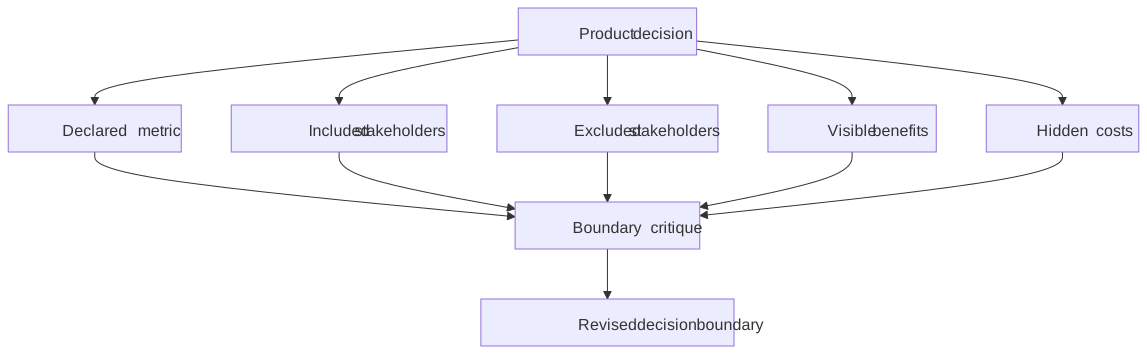
This is indispensable in ranking systems, pricing, trust and safety, workforce software, public-sector products, and AI features whose costs are partly externalised.
The practical sequence is rarely to pick one school and ignore the rest. Product managers usually get the best result by sequencing the methods.
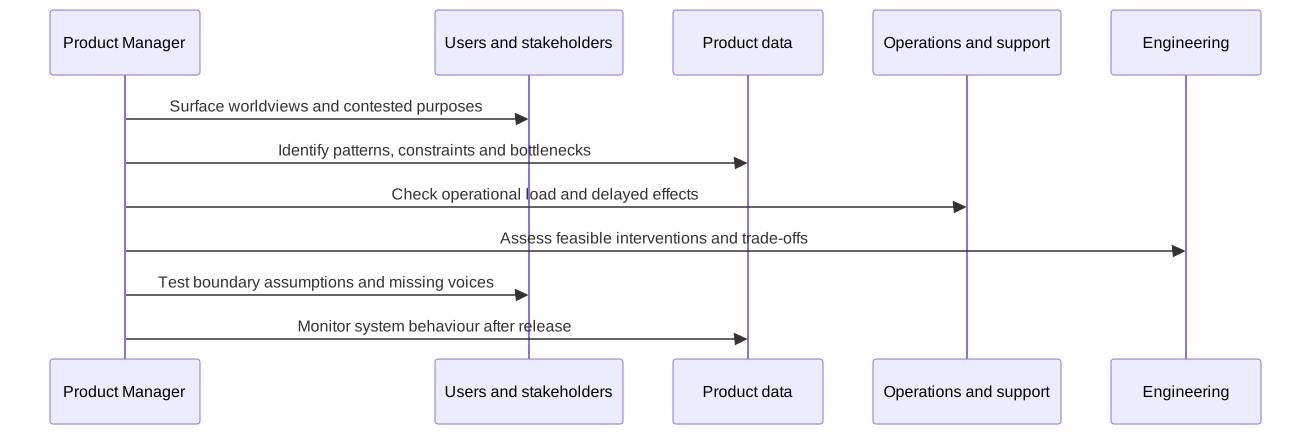
Map stakeholders, worldviews and feasible change before committing to a problem statement.
PM output: a better-framed opportunity, not just a louder backlog item.
Identify the constraint in the value flow and stop pretending every team is equally strategic this quarter.
PM output: focused investment in the bottleneck that limits customer or business value.
Ask what accumulates, what feeds back and what arrives late.
PM output: fewer “great for two sprints, painful for two quarters” decisions.
Inspect the boundary of the product decision, the metrics it privileges and the people it renders invisible.
PM output: product decisions that are more robust, more ethical and less likely to externalise the cost.
Use this checklist before approving a major product intervention.
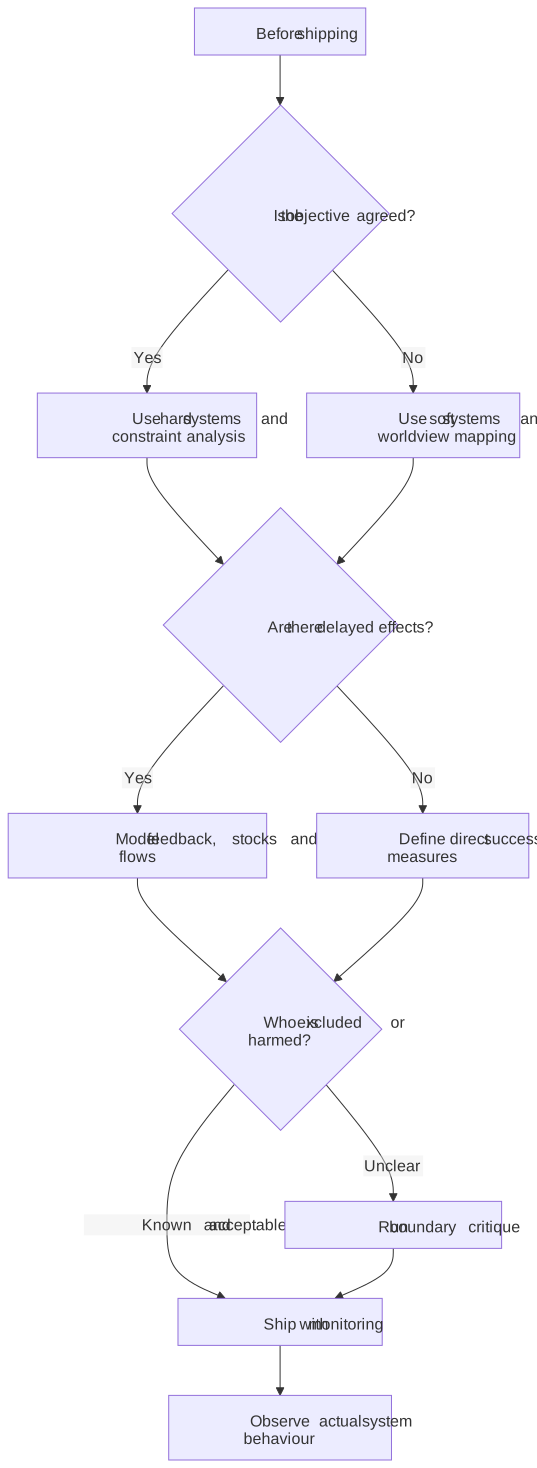
| Question | Why it matters |
|---|---|
| What behaviour is the current system already producing? | Prevents treating symptoms as isolated defects |
| Where is the current constraint? | Avoids spreading effort thinly across non-bottlenecks |
| Whose worldview defines the problem? | Exposes disagreement before solution design |
| What stock is accumulating? | Finds hidden queues, debt, frustration and risk |
| What feedback loop could amplify the change? | Identifies reinforcing or balancing dynamics |
| Where is the delay? | Prevents premature celebration |
| Who benefits from the metric? | Tests whether the measure is politically or commercially biased |
| Who bears the cost? | Exposes externalised harm or operational displacement |
| What would prove this intervention has failed? | Creates falsifiability before delivery momentum takes over |
Systems thinking does not make product management slower. Bad framing makes product management slower. Local optimisation makes product management slower. Shipping a feature that produces a delayed failure loop makes product management slower.
A systems-aware product manager does not ask only, “What feature should we build?” They ask:
What system behaviour are we trying to change, what structure is producing it, and what will happen after our intervention starts interacting with the real world?
That is the difference between dashboard whack-a-mole and disciplined product intervention.
This article is the starting point for the cluster. These build on it: