Tacit Knowledge and New Starter Onboarding: The Smallest Member Knows the Least
What a child's first days at senior school reveal about tacit knowledge, onboarding and the organisational complexity experienced people stop seeing.
3 min read →Article
How the Monty Python philosophers' football match explains analysis paralysis, and why “gather more data” only works in systems that hold still while you study them.
By Richard Faint · 21 June 2026 · 6 min read
Last updated
On screen
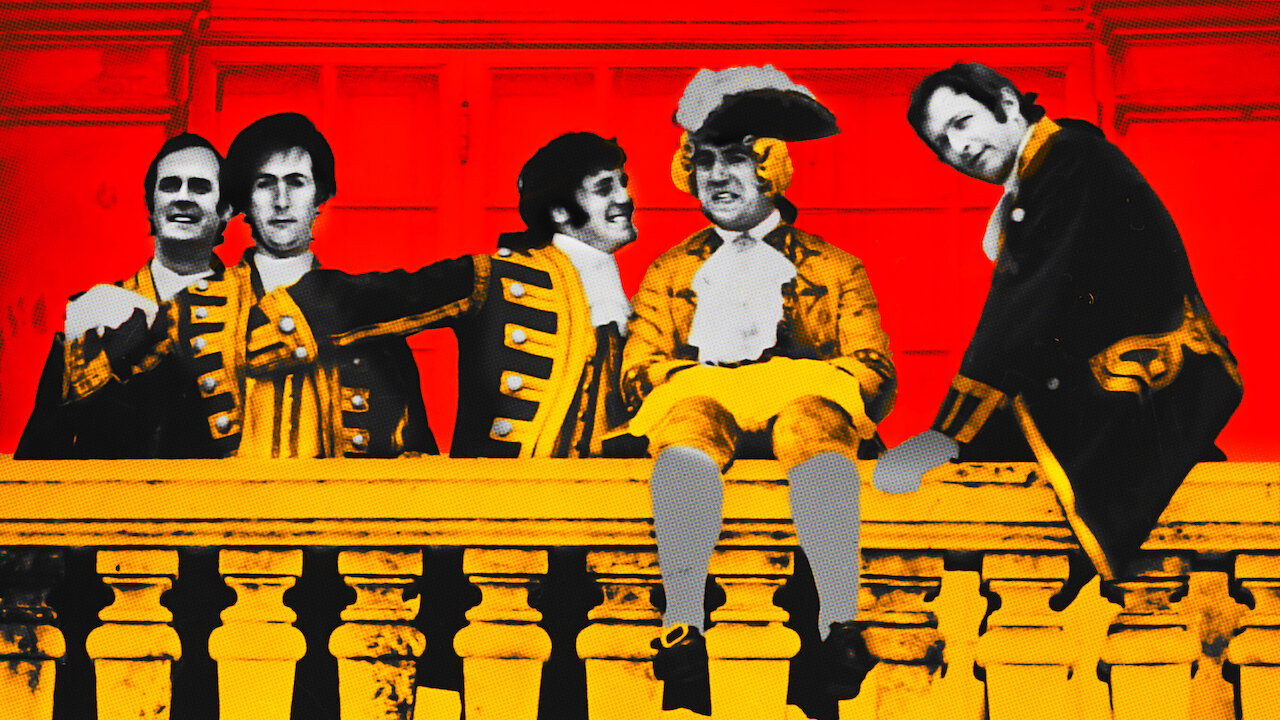
Analysis paralysis is not always solved by collecting more data. In simple systems, more information can improve a decision; in complex or chaotic systems, the situation may change while it is being analysed, making speed, judgement and feedback more valuable than false certainty.
I don’t like football and in the immortal words of The Streets I do not know the first thing about football , I couldn’t name a single current England player. Rugby union and cricket are my sports, football to me is little more than background chatter.
However, the World Cup is on, which means it’s time to clamber awkwardly onto the national bandwagon, a bit like Margo starting the conga line in The Good Life Christmas Special. While I can’t offer tactical insight, I can offer something else British comedy - I know that inside out.
So this is the first in a short series exploring Football in British Comedy from Whatever Happened to the Likely Lads? to Peep Show, Porridge, and even the gloriously niche Smoggy Queens. But there’s a twist. I’m not doing this just for nostalgia. Each of these moments in comedy football culture reveals something deeper about how organisations think, decide, and behave.
Football may not be my sport, but using comedy to expose organisational dysfunction and organisational truisms is. If you’ve ever worked in a business that overthinks, hesitates, or analyses itself into paralysis, you’ll recognise the pattern in this article immediately.
The first in the series is about about one of the strangest football matches ever televised lasted less than five minutes. Germany lined up with Kant, Hegel, Nietzsche and Beckenbauer, while Greece responded with Plato, Aristotle, Socrates and Archimedes. The referee was Confucius. For most of the match, nobody touched the ball. Instead, the players wandered the pitch deep in thought, stroking their chins over the nature of existence and whether a 4-4-2 formation can ever be morally justified. Then, with less than a minute remaining, Socrates had an idea. He sprinted forward, passed to Archimedes, received the ball back, and scored. Greece won 1-0.
The sketch, from Monty Python’s Flying Circus, remains one of the funniest football parodies ever written because it captures the fact that thinking and doing are not the same thing. Every company wants to make good decisions, every project wants to reduce risk, and every manager wants more information before committing. These are reasonable instincts.
The problem starts when pursuing certainty becomes the objective, when thinking stops supporting action and starts replacing it. The philosopher Karl Popper, who did not play in the match because he was Austrian, distinguished between “clocks” and “clouds” systems. Clock systems are orderly and predictable. Systems that behave like clouds are turbulent and resistant to precise prediction, even though they still obey physical laws. That two-way split is a useful start, but it is worth distinguishing three categories.
Football contains examples of all three. Over a season, a stronger team will create more chances, and a side that keeps allowing opponents into dangerous areas will eventually concede. These are simple truths that analysis reveals well. A team’s form is more complex, shaped by dozens of interacting factors and only partly knowable in advance. However, the outcome of one match, one moment, leans towards the chaotic. The better team can still lose, a deflected shot becomes a goal. A tactical plan unravels after one injury in the tenth minute. This is where analysis paralysis turns dangerous, not because thinking is bad, but because nobody takes responsibility for moving from thought to action. Everyone is waiting for certainty, but certainty is only reliably available in simple systems. In complex and chaotic ones, waiting just burns the opportunity. While the philosophers debate, the clock, continues to run. Markets move, competitors act, technology shifts. Eventually, not deciding becomes the decision.
The question is whether further analysis can resolve the uncertainty before the opportunity changes.
Distinguish a stable problem from interactions and rapidly diverging outcomes.
Analyse reliable evidence, model the mechanism, then act.
Try a small, reversible experiment. Observe the response and adjust.
Limit the forecast horizon, monitor closely and revise as events unfold.
Keep the decision connected to evidence from the real system.
These are different sources of uncertainty, not a ladder from good to bad. A single situation can contain all three.
This is essentially the argument of a lot of the leading books on product management
Football imposes a discipline business usually avoids. The visible clock means a manager can’t delay till perfect information is available. Businesses have time constraints as well but they are not as visible and this can lead to over-analysis.
A product that ships imperfectly generates feedback, a product stuck in discovery only generates more discovery. Socrates doesn’t score because his idea is perfect or because every philosopher on the pitch reaches consensus, he scores because he made a decision.
That’s the organisational problem agreement is seductive, but progress requires acting under residual uncertainty. Refusing to decide isn’t neutral, it’s caution as a constraint.
Try it interactively. Open Philosophy Manager ‘94 on its own page → — full-width, with a walkthrough of what each control does.