Probabilistic Delivery Forecasting for Product Managers
Richard Faint on probabilistic forecasting for product management: why fixed deadlines mislead and how to forecast delivery with ranges and confidence.
7 min read →Article
Mark Corrigan explains why a ten-leg football accumulator and a ten-assumption business plan fail for exactly the same mathematical reason.
By Richard Faint · 27 June 2026 · 6 min read
Last updated
On screen
Compound probability explains why a plan built from many individually plausible assumptions can still be unlikely to succeed. Ten activities each judged 90% likely do not create a 90% reliable programme; their uncertainties multiply.
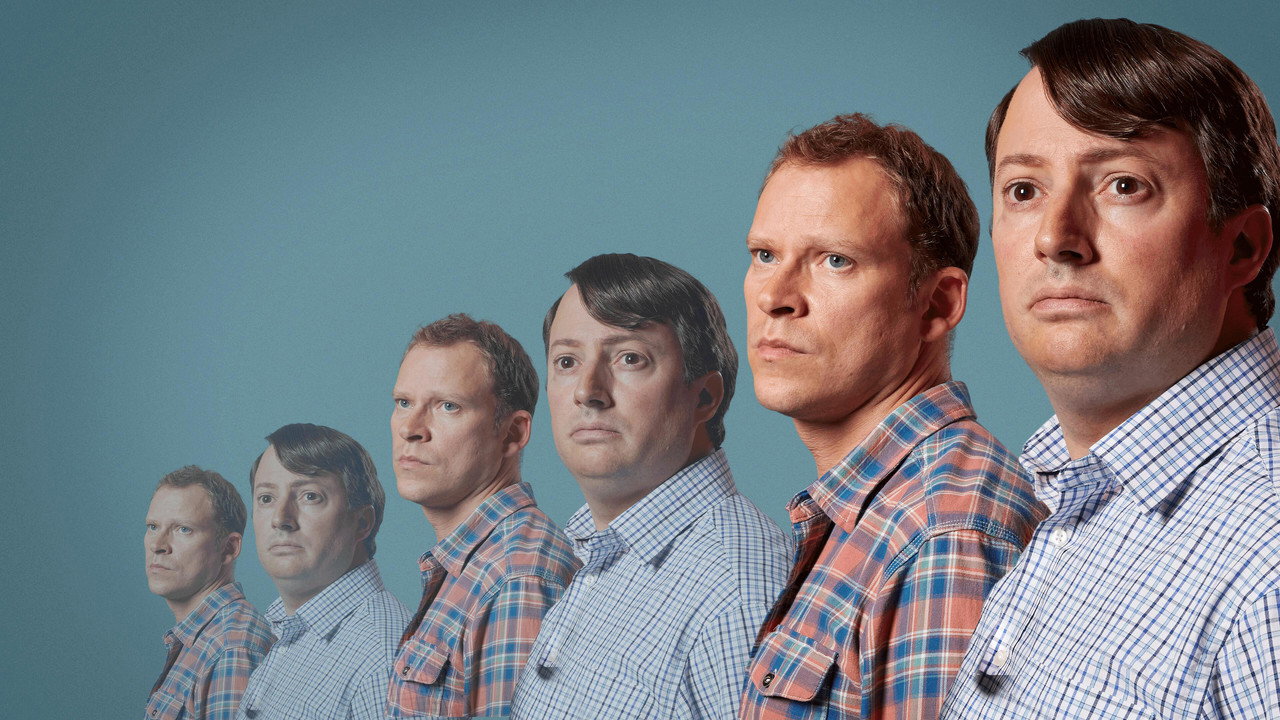
Today we have a guest writer, well actually it is me pretending to be Mark Corrigan from Peep Show. The question is am I as good as writer as Jesse Armstrong? See below for this lighthearted take with lots of in jokes
The framing is a Peep Show pastiche. The subject is compound probability, and why ten activities each at 90% confidence do not give a plan a 90% chance of success.
I have always regarded myself as a rational man, an honourable man. Not an exciting man, not a charismatic man. Certainly not one of those people who claims to “trust their instincts” or who would enjoy a dance class called rainbow rhythms. Instincts are what people rely on when they don’t have data. I am a business person, a man of systems I love a good spreadheet and even better a pivot table. A man who understands that the universe is fundamentally hostile and can only be managed through planning, analysis and an appropriately structured spreadsheet.
I am not a sportsman, I never put the ball in the goal hole, I once hired a personal trainer and that was a disaster. So when I placed the football accumulator known, I wasn’t gambling, I even called it the Three-O Walcott strategy.
I was applying probability theory.
Or at least what I understood probability theory to be after reading part of The Signal and the Noise, buying The Black Swan, and fully intending to read Thinking, Fast and Slow at some point in the future.
(Internal monologue: Yes. Statistics. Numbers. Forecasting. This is your territory. You’re basically Nate Silver. Croydon Nate Silver, admittedly, but still.)
The principle seemed straightforward enough: add more football matches and the potential payout increases. Add another and it increases further. Before long, a modest stake becomes a sum capable of solving all sorts of problems. Maybe this is how Musk started. A big win could lead to:
The genius of the accumulator is that every individual prediction is reasonable. Nobody is predicting Hartlepool United winning the Champions League, each result is plausible when viewed independently.
That is precisely why it is dangerous and what I misunderstood. Every additional match increases the reward because every additional match reduces the probability of success.
The accumulator becomes more attractive because it becomes less likely. Of course, part of me understood the risk. But that’s the problem with probability. You think you’re being a “real meat‑and‑potatoes, straight‑up‑and‑down, beef Wellington” sort of thinker and suddenly you’re explaining why fourteen separate events are somehow guaranteed to occur.
(Internal monologue: This is fine. It only needs ten results to come in. Ten entirely independent sporting events. What are the chances of one of them going wrong? Actually, don’t calculate that.)
It turns out this isn’t merely a lesson about football.
It is a lesson about business. Most business plans are simply football accumulators presented in PowerPoint. Consider a new product launch.
Each assumption appears entirely sensible; together, they form a highly sophisticated fantasy.
If each activity has a 90 percent chance of success, ten independent activities do not produce a 90 percent chance of success. The overall probability falls dramatically because the probabilities multiply together.
Every activity is 90% likely to succeed. The plan needs every one of them to succeed.
One 90% chance
0.9 multiplied 2 times
0.9 multiplied 3 times
0.9 multiplied 5 times
0.9 multiplied 10 times
This multiplication assumes independent activities. Ten such activities give a 34.9% chance of all succeeding and a 65.1% chance of at least one failure. For dependent activities, use the relevant conditional probabilities instead.
One dependency is manageable. Ten become optimism disguised as planning. I know this because I once read a chapter of The Black Swan while waiting for a delayed train and immediately began suspecting that most forecasts were nonsense.
Or at least other people’s forecasts, mine are excellent.
(Internal monologue: Taleb would definitely agree with me. Assuming I’ve understood Taleb, which statistically seems unlikely.)
The situation is usually worse than simple probability suggests because assumptions rarely operate independently (great point this is going into Business Secrets of the Pharaohs) Soon every risk is interacting with every other risk. As I vaguely remember from The Fifth Discipline, a book I definitely own and fully intend to read one day, systems are connected and problems rarely remain isolated, they propagate.
Every dependency looked manageable in isolation. Much like Project Zeus. This is where organisations often make a second mistake.
Instead of reducing complexity, they attempt to manage it they add More reporting, governance, meetings and PowerPoint.
(Internal monologue: Yes. Another steering committee. Excellent. The football results may not have improved but at least we’ve colour‑coded the problem.)
At JLB we would almost certainly have created a governance structure for the accumulator.
By the time governance concluded, the football season would have ended. The mistake is believing that more control automatically reduces uncertainty, it doesn’t, control and complexity are not opposites. In many cases they reinforce one another. Organisations often treat risk registers like I treat exercise. The existence of the document creates a vague sense that the problem is being addressed.
A simple plan with fewer assumptions will frequently outperform a sophisticated plan dependent upon dozens of interconnected activities. Most football supporters would hesitate before betting their mortgage on ten separate football results occurring exactly as predicted. Yet organisations routinely commit millions of pounds to programmes built on precisely the same logic.
The real mistake was never placing the bet. It was believing that adding more assumptions somehow made the outcome more certain.
Which, now I think about it, may also explain my marriage, my career at JLB, and Britain’s approach to digital transformation.
Try it interactively. Open the compound probability simulator on its own page → — full-width, with a walkthrough of what each control does.